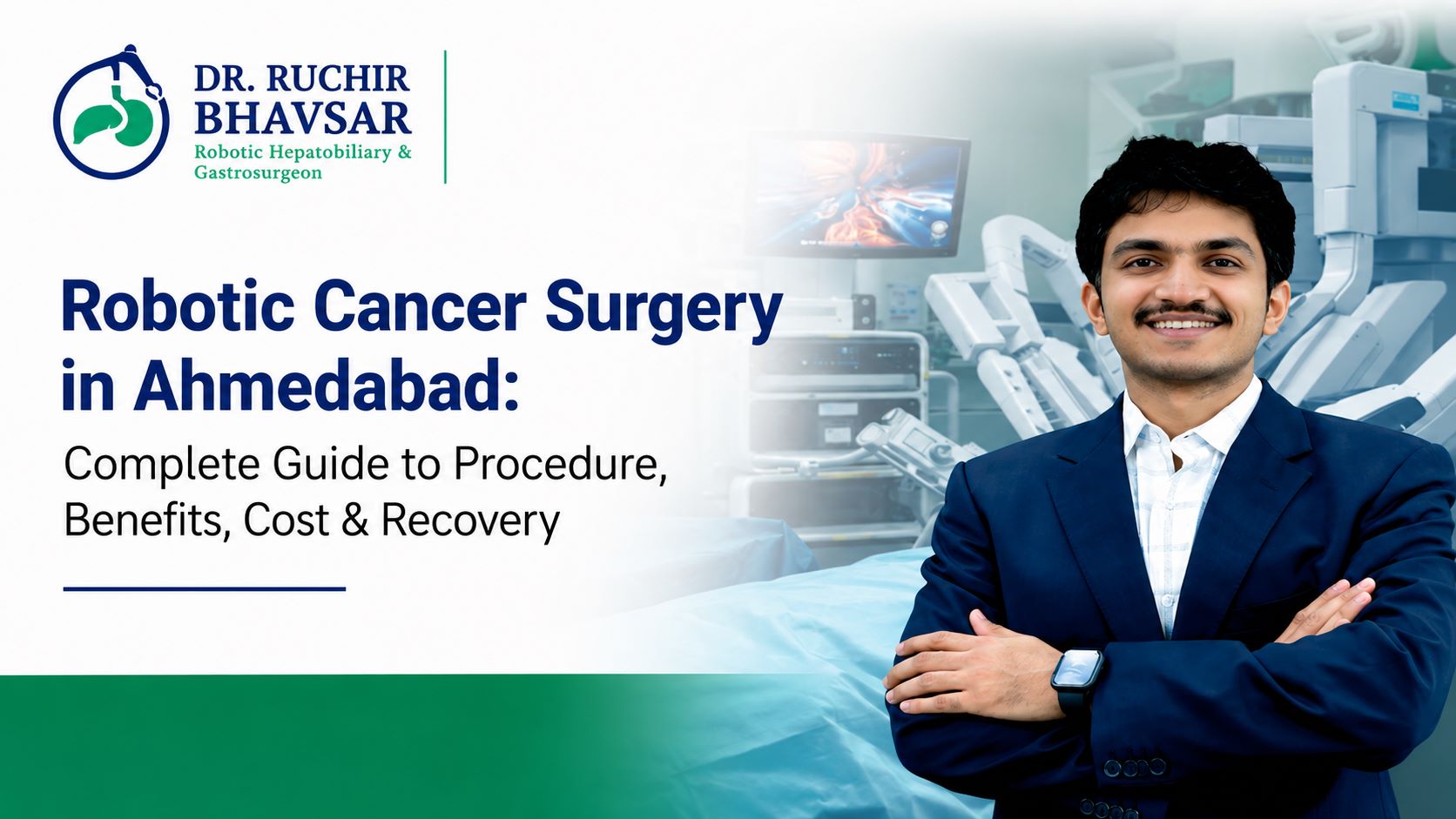
Cancer treatment has advanced significantly in recent years, and one of the most important innovations in surgical oncology is robotic-assisted surgery. This modern technology allows surgeons to perform complex procedures with greater precision while minimizing surgical trauma and recovery time.
More and more cancer patients are considering Robotic Cancer Surgery in Ahmedabad, and with good reason. As more and more international standard hospitals and highly trained cancer surgery professionals become available, the use of robotic cancer surgery is a very promising procedure in the fight against cancer.
Specialist like Dr. Ruchir Bhavsar, who is recognized for his work in advanced surgical techniques, are helping patients receive the benefits of this modern robotic cancer surgery to make it a safer and more effective surgery.
This is a comprehensive guide for patients robotic surgery in Ahmedabad, and encompasses the entire process, including how the surgery is done, the benefits of it, the recovery process, the cost of the procedure, and how to select the best laparoscopic surgeon in Ahmedabad for cancer surgery.
Robotic cancer surgery is a cutting-edge surgical technique that is designed to minimize physical trauma to the patients and enhance their recovery times. Robotic cancer surgery employs advanced technology to assist the surgeon in performing the surgical procedure, and all of this technology is controlled by the surgeon from a console.
The system offers 3D visualization and instrument maneuverability with extreme precision through tiny incisions. While the technology is robotic, the surgeon is completely in command of the surgery at all times.
With this method, surgeons can remove tumors while preserving nearby tissue, which facilitates improved recovery for patients.
Robotic surgery is an innovative technology that helps surgeons gain more accuracy and control for more difficult surgeries.
The surgeon is seated at the surgeon console and controls the robotic arms and instruments. The surgeon is able to see the surgical area in 3D, during the procedure.
The robotic system is made up of arms and instruments that are able to replicate the human hand, but with more accuracy.
The robotic system allows the surgeons to view the surgical field in 3D, high definition, and magnifies the surgical field so the surgeons will be able to see the tissue, nerves, and blood vessels more clearly.
The robotic system is able to move the instruments with micro-movements while also eliminating natural hand tremors.
Robotic-assisted surgery is being used for managing other cancers that need surgical interventions.
Robotic-assisted surgery allows the surgical removal of tumors in the colon or rectum and the preservation of vital nerves and other structures.
Robotic-assisted surgery enables the surgical removal of certain abdominal tumors with less surgical trauma.
Robotic surgery enables the surgical removal of liver tumors with excellent control and less blood loss during the procedure.
Due to the complexity of the pancreas, some chosen pancreatic processes may be able to utilize the advantages of robotic-assisted surgery.
In certain situations, surgery aided by robots may be available for the treatment of tumors of the gallbladder.
Robotic surgery is determined by the type and stage of the cancer and the overall well-being of the patient.
Compared to conventional surgery, robotic surgery has numerous benefits.
Some important benefits include:
These benefits make robotic surgery a more favorable option for patients suffering from cancer.
|
Factor |
Robotic Surgery |
Open Surgery |
|
Incision size |
Small incisions |
Large incision |
|
Blood loss |
Minimal |
Higher |
|
Pain after surgery |
Usually less |
Often more |
|
Recovery time |
Faster |
Longer |
|
Hospital stay |
Shorter |
Longer |
While open surgery may still be necessary in certain situations, robotic-assisted surgery offers clear advantages for many patients.
Although both robotic and laparoscopic surgeries are minimally invasive and involve smaller incisions, robotic surgery poses more benefits due to technological advancements.
Key differences include:
Surgeons like Dr. Ruchir Bhavsar, who's trained in minimally invasive surgeries, use both robotic and laparoscopic surgery to offer the best possible approach.
Robotic surgery may be recommended for patients who:
The type of cancer and stage, plus a complete medical assessment, determines final eligibility.
The quicker recovery time is the most significant benefit of robotic surgery.
Standard recovery time:
First 1–2 days
Patients will be monitored by the staff and doctors in the hospital after the surgery.
Within 1 week
Patients should be able to do some light activities.
Within 2–3 weeks
Patients can start to do some normal activities depending on the type of surgery performed.
Recovery speed may vary depending on the patient’s overall health and the type of cancer surgery performed.
Robotic surgery for cancer carries risks like all other surgeries. When done by experienced specialists, risks are much less common.
Possible risks may include:
Robotic surgery is safe and effective for properly chosen cancer cases. This is done by many experienced surgeons including Dr. Ruchir Bhavsar.
The factors surrounding the pricing for robotic surgeries for cancer are many.
These factors are:
Since robotic systems use advanced resources, the cost of robotic surgery is greater than standard surgeries.The cost of surgery and other associated expenses may be less due to the short stay at the hospital and quick recovery.
How a robotic surgery turns out is greatly attributed to how well the surgeon has been trained.
Here are some reasons why you should choose an experienced surgeon:
Assurance of adequate and safe surgical treatment to patients by a qualified specialist.
When researching surgeons for robotic cancer surgery, patients should consider multiple factors, such as:
Surgical decisions are best with the utmost care and consideration, as they can greatly influence surgical and oncological outcomes.
Is robotic cancer surgery safe?
Yes, robotic cancer surgery is safe, considering the surgical robotic system is employed in the hospitals and surgical oncology units where they are performed by cancer surgeon specialists. It promotes surgery precision, thereby limiting surgical trauma to the surrounding tissues.
What is the recovery time after robotic surgery?
Surgical recovery is faster with robotic surgery than traditional open surgery. Postoperative patients are able to resume light work and daily activities after about 1 and 2-3 weeks, respectively, depending on the type of surgery performed.
Is robotic surgery better than laparoscopic surgery?
Both are minimally invasive. Robotic surgery offers better imaging and increased freedom of movement, so complex oncologic procedures can be done with better precision.
How much does robotic cancer surgery cost in Ahmedabad?
It varies depending on the type of cancer surgery conducted, the infrastructure of the hospital, and the expertise of the surgeon. It is best to consult the surgeon for better clarity.
What type of cancer can robotic surgery treat?
Robotic surgery is used, in selected cases, for cancers of the colon, rectum, stomach, liver, pancreas, and gallbladder.
Does robotic surgery leave scars?
Since robotic surgery involves smaller incisions, scarring is usually much less than that of traditional open surgery.
Surgery enhanced by automation is a milestone in the history of modern oncology. This method makes the removal of tumors more accurate and less invasive which subsequently reduces the time required to recover from the surgery.
Any patient interested in Robotic Cancer Surgery in Ahmedabad should take the time to meet with a qualified and highly trained consultant. When combined with prompt interventions and adequate surgical treatments, the benefits and the speed in which one recovers from the surgery is greatly enhanced.
© 2025 All Rights Reserved by ARE InfoTech