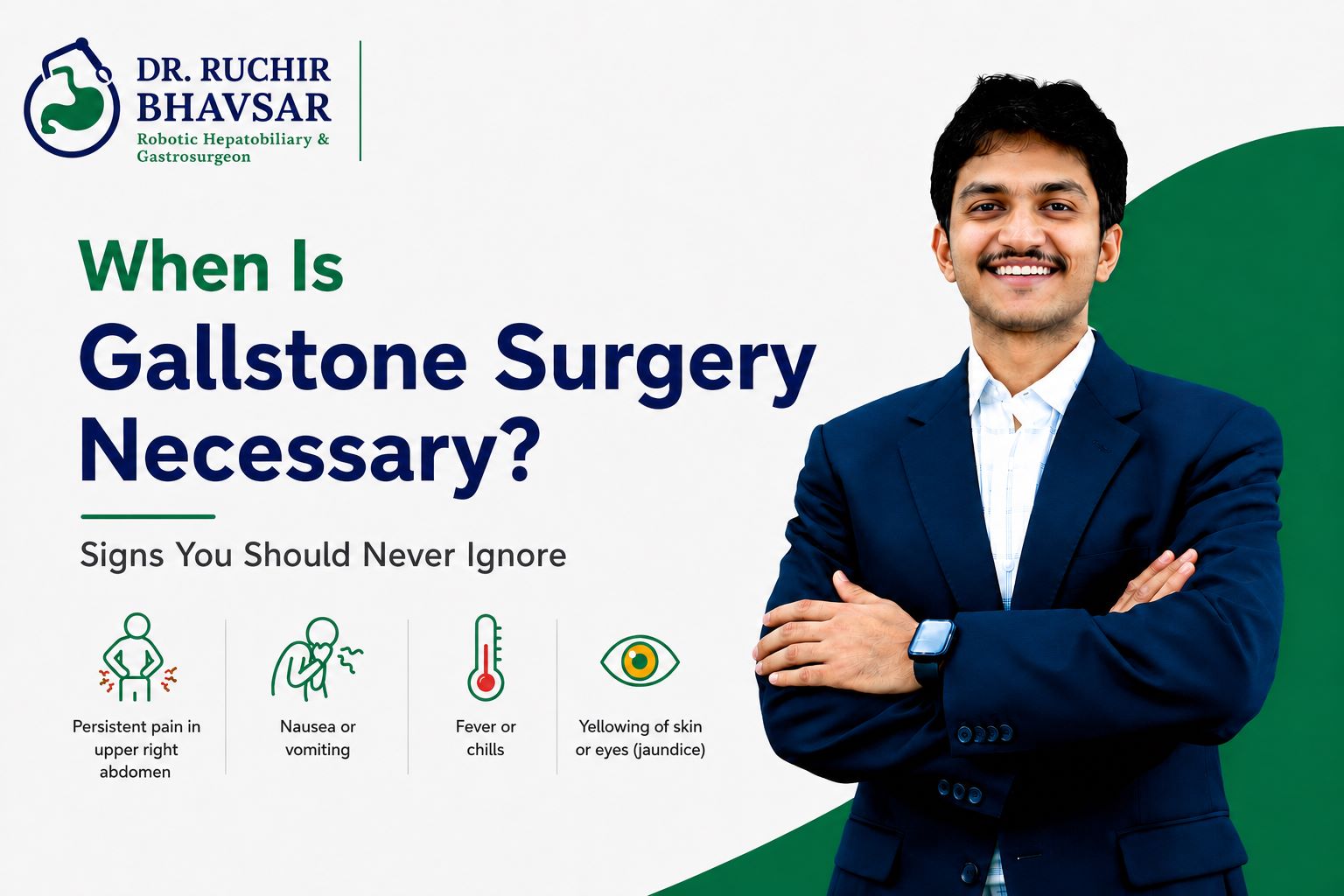
Gallstones are a nationwide concern as a common digestive disorder resulting in many adult hospital visits in India. Symptoms are completely absent in some patients, allowing them to go along with a gallbladder full of gallstones. In many others however, the gallstones can bring on significant pain and complications that require gallstones to be dealt with surgically. One question patients commonly wish to have answered is: "When is gallstone surgery necessary?"
The answer depends on the presence of any symptoms, the complications gallstones can cause, and the general health of the patient. Of course gallstones progressing to more significant concerns such as infection and bile duct obstruction is an undesirable situation that can be avoided with prompt surgical intervention.
If you are experiencing repeated abdominal pain or digestive discomfort, consulting a Gall Bladder Surgeon in Ahmedabad like Dr. Ruchir Bhavsar may help determine the right treatment approach.
Gallstones are a hardened deposition of digestive bile in the gallbladder. The gallbladder is a small organ located below the liver and is responsible for the storage of bile, a digestive fluid employed to breakdown fat.
Gallstones can vary in size, from tiny grains to larger stones, and may develop due to:
The majority of patients with gallstones do not present gallstone symptoms, and when they do, they tend to be as follows:
Gallstones surgery is deemed necessary if gallstones result in symptoms, repeated attacks, infection, inflammation, bile duct obstruction, jaundice, and an increased risk of developing pancreatitis.
Not every gallstone is an indication for an operating table.
Of noted significance, gallstones are characterized by multiple upper abdominal pain symptoms. These should lead to a patient developing an increased suspicious concern for gallstones and progression of symptoms.
Gallstones cause pain that may begin after meals, especially after spicy or greasy meals. When this pain occurs, it lasts from several minutes to several hours. It can be sharp and painful enough to interrupt sleep or interfere with normal daily activities.
If pain keeps returning, Gallbladder stone treatment may involve surgical removal of the gallbladder.
An occasional gallstone episode can be assessed as discomfort. However, frequent gallstones are signs of gallbladder dysfunction.
Constant gallstone episodes pose complications, and most cases resort to surgical treatment.
If gallstones are temporarily retained in the gallbladder, gallbladder inflammation can occur.
The symptoms are:
Untreated inflammation can cause infection and rupture.
An infected gallbladder is considered a medical emergency.
Warning signs:
Evaluation and surgery must be carried out as soon as possible.
Gallstones can move into the bile duct and block the flow of bile.
This may cause:
An obstruction of the bile duct is an emergency.
Jaundice occurs when bile flow is obstructed.
Symptoms include:
This should always be taken seriously.
Gallstones may also cause blockage of the pancreatic duct and may result in pancreatitis.
Patients often search for a pancreas doctor in ahmedabad when they develop symptoms such as:
Gallstone-related pancreatitis can become serious if untreated.
After gallstones are diagnosed by ultrasound, patients inevitably become anxious. Surgery, in fact, can be avoided.
In cases where gallstones are incidental and patients are asymptomatic, the physician can recommend a conservative ‘wait and see’ approach. Silent gallstones are those without symptoms.
These are called silent gallstones.
Those patients exhibiting mild, intermittent symptoms of gallbladder dyskinesia can be treated with:
Doctors may choose monitoring when:
Regular follow-ups remain important.
When experiencing the following symptoms, be sure to contact a healthcare professional:
New symptoms of digestive upset following the consumption of fatty foods.
These symptoms may indicate complications requiring urgent Gallbladder stone treatment.
Today, Laparoscopic gallbladder surgery is considered the gold standard for symptomatic gallstones.
The procedure uses small incisions and a camera-guided approach to remove the gallbladder.
For most patients, recovery is smoother compared to open surgery.
Finding the right surgeon ensures a positive experience and a successful procedure.
What you want in a Gall Bladder Specialist in Ahmedabad:
Dr. Ruchir Bhavsar treats many issues regarding the digestive tract, gallbladder, and other minimally invasive procedures.
Patients looking for a Gall Bladder Surgeon in Ahmedabad or guidance from a pancreas doctor in ahmedabad often seek expert evaluation before deciding on surgery.
When gallstones become symptomatic, especially with pain, recurrent episodes, inflammation, and infection with obstruction of the bile duct, jaundice, and even the risk of pancreatitis, gallstone surgery becomes necessary.
Yes. Silent gallstones and mild cases may be managed through observation and monitoring.
No. Many people have gallstones without symptoms and may never need surgery.
Yes. Laparoscopic gallbladder surgery is generally considered safe and widely used.
Most patients recover within 1–2 weeks, though full recovery may vary.
No. Since the gallbladder is removed, gallstones generally do not recur.
Choosing when gallstone surgery is necessary to protect from adverse effects. For gallstones requiring no immediate surgery, the occurrence of painful episodes, jaundice, repeated attacks, infection, etc should be treated as an emergency and never be ignored.
If you are experiencing gallstone symptoms or looking for expert guidance on Gallbladder stone treatment, consult Dr. Ruchir Bhavsar for evaluation and personalized treatment options in Ahmedabad.
© 2025 All Rights Reserved by ARE InfoTech