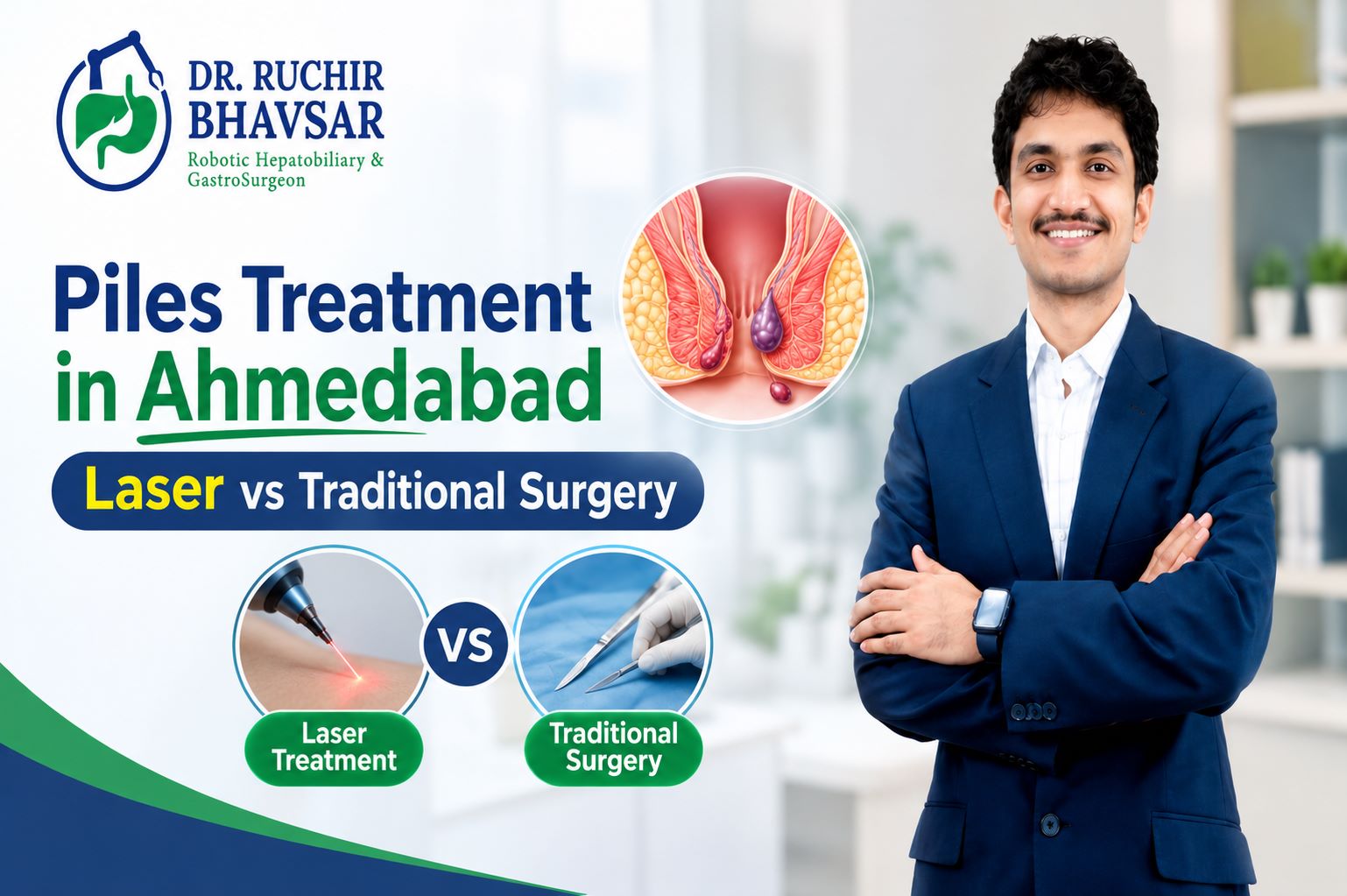
Nobody walks into a clinic excited to talk about piles. Most people wait. They pick up a cream from the chemist, hope it settles, and tell themselves it’s just a little bleeding. Weeks pass.
If that sounds familiar, you’re far from alone. Piles (haemorrhoids) are among the most common reasons people see a surgeon, and most cases are very treatable. This guide covers laser treatment, traditional surgery and what actually decides between them, so your search for Piles Treatment in Ahmedabad ends with clearer answers. Dr. Ruchir Bhavsar consults on gastrointestinal and surgical conditions and helps patients work out which option fits their case.
Piles are swollen blood vessels inside the rectum or around the anus. Pressure is the main culprit. Constipation, a low-fibre diet, too little water, pregnancy, heavy lifting and long hours at a desk all push that pressure up. So does sitting on the toilet with your phone for fifteen minutes.
There are two types. Internal piles sit inside the rectum and usually bleed without hurting, which is exactly why people ignore them. External piles form under the skin around the anus. These are the itchy, swollen, painful ones, especially if a clot forms. Which type you have changes the treatment, so it’s worth finding out.
Some people get one mild symptom and barely think about it. Others find that sitting through a meeting or passing stool becomes a real struggle. The usual signs are bright red blood after a bowel movement, itching or irritation, pain while sitting, a lump near the anal opening, or a feeling that something is bulging out.
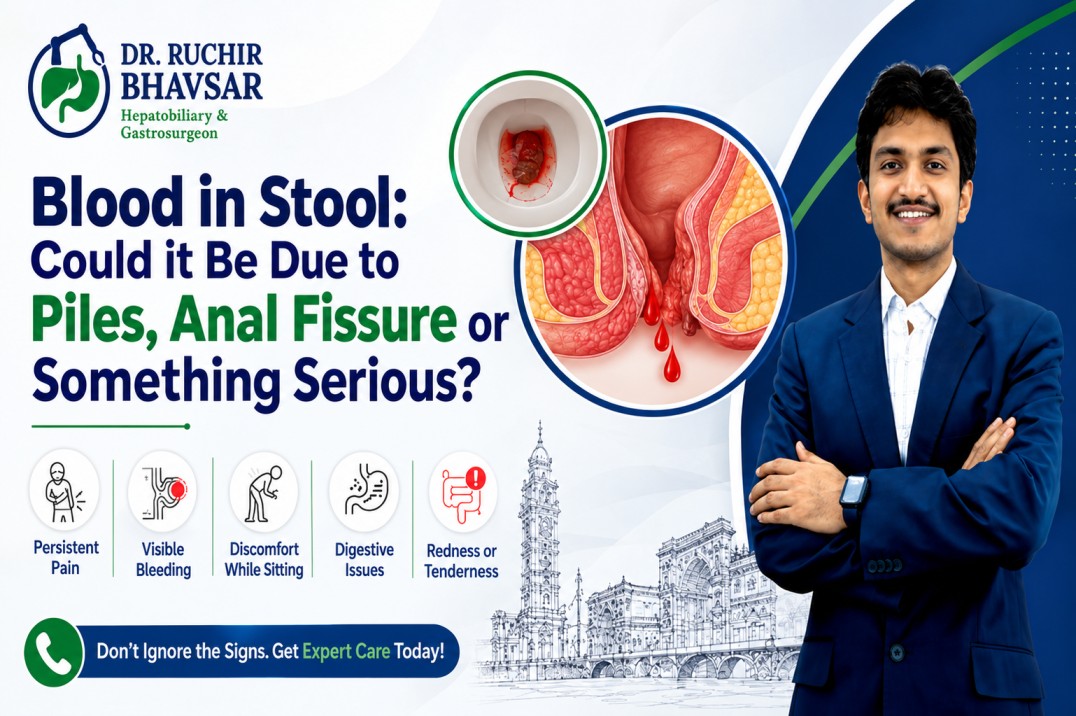
Here is the part people miss: bleeding is not always piles. Anal fissures can cause it, and so can other colorectal conditions. Guessing at home is risky. A Colorectal Surgeon in Ahmedabad can examine you and tell you what’s really going on.
Patients ask this more than anything else. Honestly, neither is “better” across the board. It depends on how advanced your piles are and what your doctor finds on examination.
Laser treatment uses focused energy to shrink the haemorrhoidal tissue and cut down its blood supply. It’s minimally invasive, so many patients experience less pain, less bleeding and a quicker return to normal routines. For the right person, that’s a real advantage.
But it has limits. Advanced or complicated piles may need something stronger, and piles can come back after laser treatment, particularly if constipation continues.
Traditional surgery, called haemorrhoidectomy, removes the affected tissue directly. Doctors usually suggest it for large external piles, advanced internal piles, or when other treatments haven’t worked well enough. It has a long track record and can give good long-term results.
Recovery takes longer, though. Expect more discomfort and some wound care in the early days.
So, Which Treatment Should You Choose?
Don’t pick a procedure because it’s trending or because a stranger online swore by it. Get examined first. Then sit down with a specialist and go through the options for your case.
Often, yes. When piles are caught early, small changes can be enough. Add more fruits, vegetables and whole grains to your meals. Drink enough water so stools stay soft. Stop straining, and don’t linger on the toilet. A daily walk helps digestion more than people expect. Warm sitz baths can calm irritation, and any medicines or creams your doctor prescribes should be used exactly as directed.
If symptoms don’t improve despite all this, rubber band ligation or surgery may come into the picture.
A good surgeon makes the whole experience easier. When you look for Colorectal Surgery Doctors in Ahmedabad, check their qualifications and experience. Notice whether they examine you properly and explain things in plain language. You can also consult a Gastro Surgeon in Ahmedabad for related digestive and surgical concerns.
Before agreeing to anything, ask about the procedure, the risks, the recovery time and the follow-up plan. A good doctor won’t mind the questions.
Ongoing bleeding, discomfort around the anus or a change in bowel habits deserves attention. The first step is always a correct diagnosis. Dr. Ruchir Bhavsar provides consultation for gastrointestinal and surgical conditions, so you can talk through your symptoms, learn which tests you may need and understand the treatment options available to you.
1. Is laser piles treatment better than traditional surgery?
In selected cases, laser may mean less pain and quicker recovery. For advanced or complicated piles, traditional surgery may suit better.
2. How long does recovery take after laser piles treatment?
Some patients are back to light activities within a few days. It varies with the procedure and how you heal.
3. Can piles come back after treatment?
Yes. Fibre-rich food, enough water and avoiding constipation lower the chances.
4. Can early-stage piles improve without surgery?
Yes. Diet changes, hydration, better habits and prescribed medicines often manage early piles.
5. When should I visit a colorectal surgeon?
When you have repeated rectal bleeding, persistent pain, swelling, itching or a lump around the anus.
Living with piles is uncomfortable, but waiting it out rarely helps. With a proper diagnosis, they can be managed through lifestyle changes, medicines, minimally invasive procedures or surgery, depending on severity.
If you’re looking for Piles Treatment in Ahmedabad, consult Dr. Ruchir Bhavsar to understand your condition and explore the options that suit you. Getting advice at the right time makes your decisions about colorectal health a lot easier.
© 2025 All Rights Reserved by ARE InfoTech